
Start with the artwork
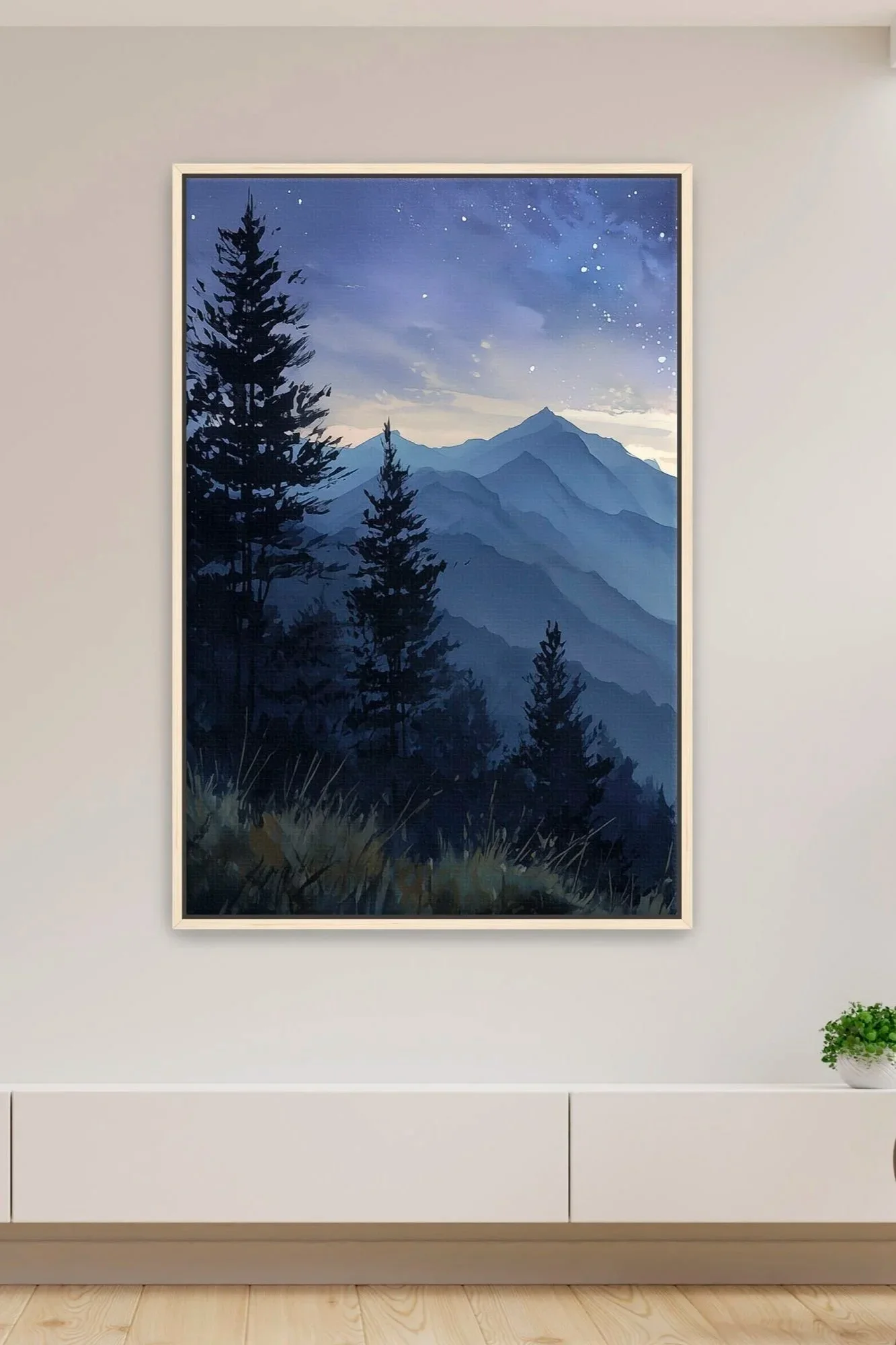
The frame is part of how you experience a picture. It can gently carry the colours into the room, define the edge of a pale landscape, or add structure around a softer composition.
Begin by looking at the work itself. Notice its lightest and darkest areas, its warm and cool tones, and how much detail it holds. Then ask what you want to notice first when you enter the room: the frame’s outline, the landscape, or the whole arrangement together.
Look for a connection with the room
You do not need every wood or metal finish to match. A frame can connect with one or two things already present: the warmth of a table, the dark outline of a lamp, or a pale tone in the upholstery.
Light wood can bring warmth to a gentle palette. A darker frame can give the artwork a clear boundary. White can feel light against a pale wall, while black can repeat an existing dark accent. The effect depends on your wall colour, lighting, and the image itself.
If you are choosing between finishes, compare them in the room where the artwork will hang. Look in daylight and again with your usual evening lighting. A finish that works in a product photograph may read differently beside your own furniture.
Decide how much contrast you want
For a quieter arrangement, choose a frame whose tone sits comfortably with the surroundings. For a stronger outline, introduce more contrast between frame and wall.
Neither approach needs to dominate the artwork. Step back and consider the whole wall. The right amount of contrast is the amount that gives the scene the presence you want.
Consider the surface as well as the colour
Framed paper and float-framed canvas create different edges and surfaces. Paper is presented behind acrylic in the framed finish described in our Frames & Finishes guide. A float frame surrounds the canvas with a visible gap that gives the work depth.
Use the guide to compare construction and frame styles, then check the individual product listing. Available finishes and colours can vary by artwork, and the listing is where you choose the specific option you will receive.
Make the final choice at room scale
Mark the outside dimensions of the framed artwork on the wall with painter’s tape. Include the complete frame, rather than only the printed image. Look from the doorway and your usual seat.
For a triptych, consider all three frames and the spaces between them as one arrangement. Consistent frame finishes usually help the landscape read as a connected whole.
Choose the frame that supports both the artwork and the room you live in. It should feel comfortable with the things around it while leaving the landscape room to speak.